
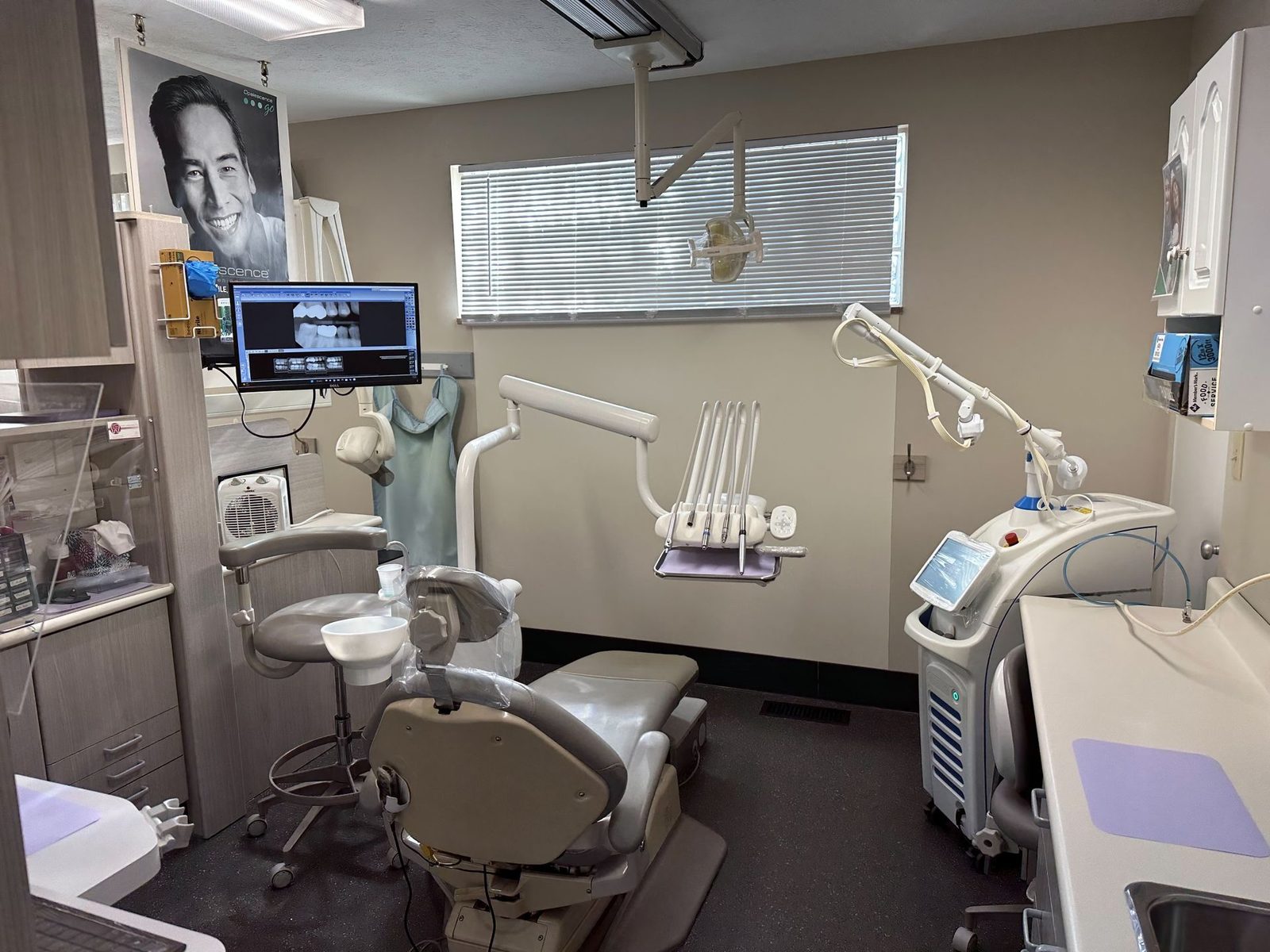
If a tooth with an old filling breaks, another filling is not automatically the best repair. A small chip with plenty of sound tooth left may be filled again; if the filling is already large and the remaining tooth walls are thin or cracked, a crown may better protect the tooth during chewing. Pain on biting or sensitivity to cold needs an examination first, because a crown cannot fix every cause of pain.
- Crown vs filling after a tooth breaks depends on how much strong natural tooth remains, not just the size of the missing piece.
- A smaller area of decay with a solid surrounding tooth often needs only a filling.
- A previously filled tooth that breaks may need a crown if its remaining walls cannot support another filling.
- Bite pain or lingering cold pain needs diagnosis before choosing a crown, filling, or root canal.
Why this matters
A filling replaces lost tooth structure, but it still depends on the surrounding natural tooth for support. When an old filling occupies much of a tooth, adding more filling material does not recreate the strength of the tooth that was lost. You deserve to know whether the dentist is repairing a limited damaged spot or protecting the remaining tooth from breaking again.
That is why Dentistry of East Colonial explains both tooth-colored fillings and crowns rather than treating every chip the same way. The right choice follows an exam, not a fixed percentage of tooth or filling material.
Why would I need a crown instead of another filling?
A filling works when the remaining tooth can hold it and withstand your bite. A crown covers more of the visible tooth and may protect weakened chewing surfaces when a large filling, decay, wear, or a fracture has left too little dependable natural tooth. The question is not simply, “Can we put another filling there?” It is, “Will the remaining tooth hold up around it?”
| What the exam finds | A filling may be enough when… | A crown may be preferred when… |
|---|---|---|
| New decay | The damaged area is limited and the remaining tooth is sturdy | Removing decay leaves thin walls or weakened chewing surfaces |
| Old filling and a new break | The break is small and sound tooth still supports the repair | A supporting wall or chewing cusp has broken around a large filling |
| Bite sensitivity | A small repair or bite adjustment addresses the diagnosed cause | A restorable crack or weakened cusp needs broader protection after the tooth is evaluated |
| Cold sensitivity | A small cavity or exposed area explains the symptom and the nerve is healthy | Major structural damage needs coverage, but the nerve must be assessed first |
A crown does not replace every possible middle option. Depending on the tooth, the dentist may discuss a partial-coverage restoration that protects a weakened chewing cusp without covering as much tooth as a full crown. The size, location, bite, and condition of the nerve guide that decision.
If my filled tooth broke, why not just put in a bigger filling?
The old filling may have been appropriate when it was placed. Years later, new decay, wear, grinding, or a crack can leave less strong natural tooth around it. If a corner of the tooth breaks off while the filling stays in place, the tooth itself may be the part that failed. Simply replacing the missing corner with more material may not support a thin wall against repeated chewing.
Picture a back tooth with a wide filling across its chewing surface. Its raised edges, called cusps, still bear bite forces. If a cusp cracks or breaks, the dentist needs to check how far the fracture extends, whether decay is present beneath the old filling, and whether the remaining walls can support a repair. A crown may cover and protect those weakened surfaces; a small isolated chip may still be repairable with a filling.
A broken filling is not the same as a broken tooth. If only some filling material has chipped away, the natural tooth is strong, and there is no deeper decay or crack, replacing the filling can be reasonable. If the tooth wall has fractured, the decision changes. Dentistry of East Colonial describes crowns for teeth with a large filling, fracture, or extensive decay.
There is no universal amount of filling material at which every tooth needs a crown. Two teeth with similar-looking fillings can have different amounts of sound enamel and dentin, different cracks, and different chewing forces. A dentist must assess the actual tooth rather than use a one-size-fits-all rule.
When is a filling the more conservative choice?
A filling commonly suits early, smaller decay or minor damage when enough healthy tooth remains to support the repair. The dentist removes the damaged material, fills the space, shapes it, and checks your bite. This preserves more of the original tooth than preparing it for a full crown when a crown is unnecessary.
A tooth does not have to be completely symptom-free to receive a filling. Brief sensitivity can occur with a cavity or exposed tooth surface; it does not by itself prove that a crown or root canal is needed. But persistent or unexplained symptoms should be assessed before treatment, and a small cavity with a symptom is not the same as a badly broken, heavily filled tooth.
A filling is not a promise that the repaired tooth will never need another treatment. The dentist can monitor its edges, check for new decay, and watch for cracks at future visits. Choose the least extensive repair that can reliably support the particular tooth, not simply the smallest restoration available.
Does pain when I bite mean I need a crown?
No. Bite pain is a clue, not a diagnosis. A cracked cusp near an old filling can hurt when pressure makes the pieces move. A filling or crown that contacts the opposing tooth too early may also cause bite tenderness; so can inflammation around the tooth or a problem inside it. Putting a crown over the tooth before finding the cause could leave the pain unresolved.
Tell the dentist whether the pain occurs when you bite down, release pressure, or chew on one part of the tooth. Mention when the filling was placed and whether you felt a crack or lost a piece. The exam may include checking your bite, testing the tooth, and taking images. Small cracks do not always show clearly on routine images, so the clinical findings matter too.
If a treatable crack affects a chewing cusp but the inner tissue remains healthy, protective coverage may help. If a crack extends deeply or the tooth cannot be restored, a crown alone may not save it. If the pulp inside the tooth is irreversibly inflamed or infected, the dentist may need to discuss root canal treatment as well as the final restoration.
What if the tooth is sensitive to cold?
The duration and pattern of cold sensitivity matter more than the word “sensitive.” A brief response that stops soon after the cold is removed can have several causes, including an exposed surface or a cavity. Pain that lingers after cold is gone, starts without a trigger, wakes you, or comes with swelling needs prompt evaluation of the tooth's inner tissue.
A crown protects the outside of a weakened tooth. It is not a treatment for an infected nerve by itself, and it cannot guarantee that sensitivity will disappear. Before recommending a crown for a cold-sensitive tooth, the dentist should test the pulp, examine for decay or cracks, and discuss whether a filling, a crown, root canal treatment, or another approach fits the diagnosis. The practice's root canal treatment guide explains why lingering sensitivity sometimes points to a deeper issue.
A tooth can also be temporarily sensitive after recent dental work. If the bite feels high or symptoms are worsening instead of settling, call for a check rather than assuming it will go away. Never use symptom intensity alone to choose between a filling and a crown.
What happens at the appointment for a broken, previously filled tooth?
- Describe the break and the symptoms. When did the tooth chip? Did part of the filling fall out, or did natural tooth break? Does it hurt on biting or linger after cold?
- Check the remaining tooth. The dentist looks at the old restoration, decay, cracks, gums, and how your teeth meet. Images and tests may help show whether the nerve or roots are involved.
- Review repairable options. A smaller break with enough sound tooth may be filled. A weakened chewing surface may call for a crown or another form of protective coverage. A tooth with deeper pulp disease may first need root canal treatment; a fracture that extends too far may not be restorable.
- Agree on the final restoration. Ask which natural walls remain, what the repair will cover, and what happens if the tooth is found to be more damaged once the old filling is removed.
The choice is not just a question of appearance. A crown may require more tooth preparation and a separate fitting process, while a filling is generally a more limited repair when the tooth can support it. Neither lasts forever. Both require cleaning around their edges and routine follow-up.
What should I do while waiting to be seen?
Avoid chewing hard foods on the broken side. Keep the area clean with gentle brushing, and save a broken fragment if you have it. Do not use household glue to reattach a piece or keep testing the tooth by biting on it. If there is a sharp edge, ask the office for advice on keeping it from rubbing your cheek until the appointment.
Call promptly if pain is increasing, the tooth is difficult to chew on, or a significant piece has broken. Swelling or fever also warrants prompt dental advice. Trouble breathing or swallowing with facial swelling needs emergency medical care. Dentistry of East Colonial's emergency dentistry page explains how to request an urgent evaluation; same-day care depends on the schedule and your needs.
FAQ
Can a broken tooth with an old filling be filled again?
Yes, if the break is limited and enough sound natural tooth remains to support the new filling. If a wall or cusp has fractured around a large filling, a crown or other protective covering may be more appropriate.
Why would my dentist recommend a crown instead of a larger filling?
A crown may cover weakened chewing surfaces when too little strong tooth remains around a large filling. More filling material cannot replace the support of the natural tooth that has already broken away.
Does a large filling always mean I need a crown?
No. The dentist also checks the remaining tooth walls, cracks, decay, chewing forces, and symptoms. There is no universal filling-size cutoff that decides the treatment for every tooth.
Should a small cavity get a crown?
Usually a smaller cavity with sufficient sound tooth can be repaired more conservatively with a filling. Your dentist will assess the tooth and explain if another issue changes that recommendation.
Does biting pain mean the tooth is cracked?
Not necessarily. A crack is one possible cause, but a high filling, inflamed tissues, or another problem can also hurt when you bite. The cause needs an exam before choosing treatment.
Will a crown stop cold sensitivity?
Not always. A crown can protect a weakened tooth but will not cure an infected or irreversibly inflamed nerve. Lingering or worsening cold pain should be assessed before the final restoration is chosen.
Could a broken tooth need a root canal and a crown?
Yes, if the inner tissue is damaged or infected and the remaining tooth is restorable. A root canal treats the inside; a crown may then protect the weakened outside.
One last thing
If the old filling is still in place but the surrounding tooth broke, ask to see how much natural tooth remains. That picture explains why another filling may be enough for one tooth yet leave a different tooth vulnerable to another break. Dentistry of East Colonial can examine the break, explain the options in plain language, and help you decide on a repair that fits your tooth. Request an appointment when you are ready to talk it through.